
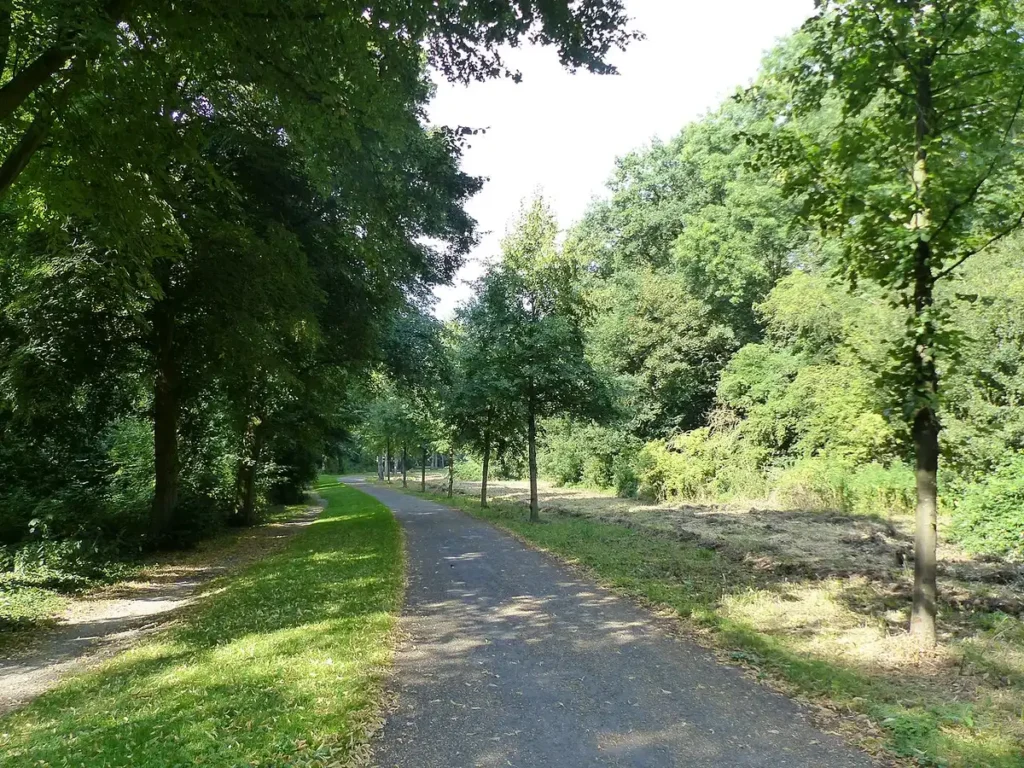
Walkers and cyclists in the Amsterdamse Bos, the large forest park on Amsterdam’s southern edge, will find some familiar paths gone in 2027.
The park announced on 26 November that it will remove 5 km of paths, starting early in the year.
Paving, foundations and verges will be dug out, and tree trunks laid across the old entrances.
Which paths will go
The choice fell mostly on little-used paths that run right next to another path, and on paths through vulnerable nature.
In busy spots the double paths stay, so walkers and cyclists keep apart.
The northeastern part of the park, which draws many visitors and has few paths, is left alone.
A list of the paths is due soon.
The last part of an old promise
The work completes a pledge in the Bosplan, the park’s plan for 2020 to 2030: take out 13 km of paths, about 5% of a network of more than 200 km, and gain 7.5 hectares of forest.
The first 8 km went between 2020 and 2023.
When that round began in 2021, Amsterdam set aside €2 million for it, and 500 new trees were planned for the freed ground.
A forest ranger said at the time that parts of the park had become a spaghetti of paths.
Nature and money
Bigger unbroken stretches of forest give plants and animals more quiet, the park says.
Every path that goes also saves on inspections and repairs, year after year.
The park has been short of money for years: the Bosplan put the yearly gap in the upkeep budget at €2.7 million, and in 2022 two members of Amsterdam’s city government told the council that making up for 40 years of overdue maintenance would take €7 million extra a year.
Meanwhile the park keeps getting busier: visits rose from 6 million in 2015 to 7.5 million in 2022.
The Amsterdamse Bos covers about 1,000 hectares and lies almost entirely in Amstelveen, but Amsterdam owns and runs it.
Once a path is closed, the park asks visitors to keep to the ones that remain, so the ground can grow over.
Photo: Amsterdamse Bos by Elekes Andor, CC BY-SA 4.0, via Wikimedia Commons
Sources: amsterdamsebos.nl, nhnieuws.nl