Almost everything in Dutch life is gated behind one number, and you cannot get the number without an address.
That is the whole shape of your first months: address, registration, BSN, then bank, insurance and everything else in that order.
What follows is the sequence, the current figures, and the places where the order genuinely cannot be rearranged.
The First Thirty Days
Register at a Stadsloket as soon as you have an address, which is what produces your Burgerservicenummer.
A first registration from abroad is a walk-in at any Stadsloket, weekdays nine to four and until six on Thursdays, and there is no fee.
Bring your passport, your rental or purchase contract and, if you are moving into a home where someone is already registered, a consent form signed by the longest-registered resident there.
Apply for DigiD the moment the BSN exists, because the activation code comes by post about a week later and half the Dutch state is behind it.
Non-EU nationals almost always arrive through an employer sponsoring a highly skilled migrant permit, which the employer files with the IND before you travel; EU nationals need no permit at all and go straight to registration.
Getting the admin done in the first month is not administrative diligence, it is the thing that lets you rent, get paid and see a doctor.
Housing And Where To Base Yourself
The rental market is the hardest part of arriving here, and the rules changed materially in 2023 and 2024.
A rental agent acting for the landlord may not charge you a fee, homes scoring up to 186 points on the national points system have a legally capped rent, and an indefinite contract is again the default rather than a two-year one.
Pararius and Funda carry most listings, and landlords generally test for gross income of three to four times the monthly rent.
On neighbourhoods, Oud-West is cafés and markets and is where most people in their late twenties end up, Oud-Zuid is quieter and greener and near Vondelpark, and Noord across the IJ is cheaper, newer and connected by a four-minute free ferry.
De Pijp has the Albert Cuyp market and the highest concentration of restaurants per street in the city; Oost is the one that has changed most in the last decade.
Amstelveen is the traditional choice for families with children at the international schools, and Utrecht, Rotterdam, The Hague and Haarlem all have direct trains and lower rents.
A great many people who work in Amsterdam do not live in it, and the commute from Haarlem is fifteen minutes.
Money, Work And Everyday Setup
Open a Dutch bank account as soon as the BSN exists, because a foreign IBAN will be refused by some Dutch direct debits and by parts of iDEAL.
ING, ABN AMRO and Rabobank all operate in English, and Bunq opens an account without an in-person appointment, which is why new arrivals use it in the gap.
On the 30 percent ruling, the tax-free share is 30 percent of gross salary in 2026 and drops to a flat 27 percent from 1 January 2027, with a higher salary threshold from that date.
The taper introduced in 2024 that would have cut the benefit to 20 and then 10 percent was scrapped, so what applies is a single rate for the whole period of the grant.
Ask your employer to apply for it rather than assuming it is automatic, and check it appears on your first payslip.
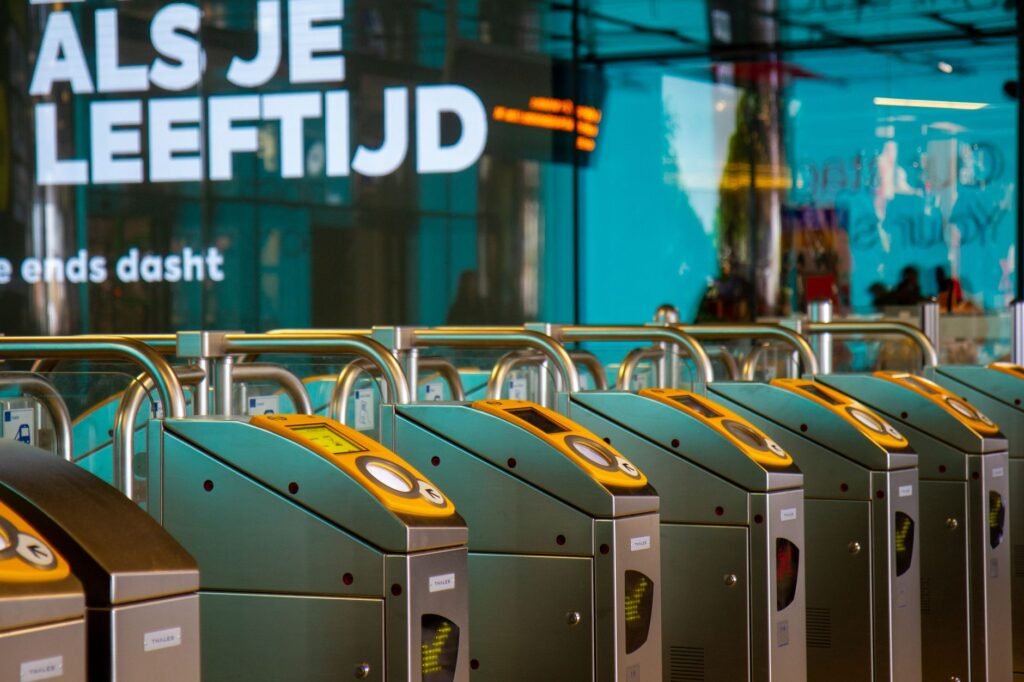
For getting about, a contactless bank card and OVpay covers the tram, metro, bus and train with no card to buy, and GVB sells a one-hour ticket at 3.40 euros and a day ticket at 10 euros if you prefer a fixed price.
Swapfiets rents a bike with maintenance included from just under 20 euros a month, which is the standard answer for a first year before you buy one.
Two cultural notes that save arguments: Dutch directness is meant as efficiency rather than rudeness, and everyone genuinely does check Buienradar before leaving the house.
Healthcare, Schools And Family Life
Dutch basic health insurance is compulsory for anyone living or working here and must be taken out within four months of registering, backdated to your arrival date.
The average basic premium in 2026 is around 159 euros a month, and the compulsory excess, the eigen risico, is 385 euros a year before the insurance pays anything beyond GP visits.
GP care, maternity care and care for children under eighteen sit outside the excess entirely.
Register with a huisarts near your home in the first weeks, because they are the gatekeeper to every specialist and practices close their lists when full.
For schools, Dutch state schools are free and taught in Dutch, and children under about ten typically become fluent within a year.
The Amsterdam International Community School is state-funded with an IB curriculum and a parental contribution far below private fees, and it has an application process with limited places rather than open enrolment.
The International School of Amsterdam and the British School of Amsterdam are fully private, with fees in the tens of thousands per year.
Our guide to international schools in Amsterdam compares the subsidised and private schools side by side, with curricula, age ranges and how admissions work.
The University of Amsterdam and the Vrije Universiteit both teach extensively in English at master’s level, and bilingual state secondary streams exist but are heavily oversubscribed.
Frequently Asked Questions
What is genuinely hard about moving to Amsterdam?
Housing, by a distance: supply is short, competition is immediate, and landlords decide on the day of the viewing.
Everything else is administratively slow rather than difficult, and the winter darkness catches out more people than the rain does.
What does it cost to live here as a single person?
Rent is the dominant variable and everything else is comparatively predictable: around 147 euros a month for gas and electricity, 18 for water, and 26 to 45 for internet.
Add roughly 159 euros for basic health insurance and a transport budget that a bike largely removes.
What do Americans specifically need to know?
You need a residence permit to live and work here, in practice sponsored by an employer under the highly skilled migrant scheme, or self-sponsored under the Dutch American Friendship Treaty if you are self-employed.
US citizens continue to file US tax returns from abroad regardless of Dutch tax residency, so budget for an accountant who handles both.
How does the 30 percent ruling work now?
Qualifying employees receive 30 percent of gross salary free of income tax in 2026, falling to a flat 27 percent from January 2027 with a higher salary threshold.
It is applied for by the employer, has a maximum duration, and is not available to everyone who moves here for work.
What is student life like?
Cheap by the standards of the city and difficult in exactly one respect, which is finding a room.
Use university housing services and start looking months early, and consider Utrecht or Haarlem with a daily train rather than holding out for Amsterdam itself.
What is the weather actually like?
Mild summers around 18 to 22 degrees, damp winters between about 2 and 6, and rain distributed across the whole year in short bursts rather than long spells.
A genuinely waterproof jacket and layers beat an umbrella, which the wind here will destroy.
Should I learn Dutch in my first few months?
You can manage daily life in English, but even basic Dutch helps with bureaucracy and local friendships.
Our guide to Amsterdam’s language schools shortlists where to start.