
Amsterdam is a good city to bring children to for a practical reason rather than a sentimental one: the distances are short and the trams go everywhere.
Most of what follows is within twenty minutes of the rest of it, which means a day can be rebuilt around a tired four-year-old without losing the day.
The best windows are late April to early June and the whole of September, when the weather holds and the museum queues are half what they are in July and August.
This guide covers what to book, how to structure a day, which neighbourhood to sleep in, what children will actually eat, and where to go when everyone has had enough.
Best Things To Do First
NEMO is the one to book first: five floors of experiments children run themselves, inside the green ship-shaped building sticking out over the water at the Oosterdok.
Allow two to three hours, and note that the roof terrace is free and reachable without a museum ticket, which makes it useful twice.
The Rijksmuseum on Museumplein holds older children better than expected if you pick up the family trail at the information desk, which turns the Gallery of Honour into a search rather than a walk.
Under-18s go in free, and Museumplein outside is open grass where children can be let loose between museums.
The Anne Frank House is online-only and sells out as soon as each batch is released, so check the release schedule on their own site and set an alarm for it.
It suits children of about eight and up, and it works far better if they have read some of the diary first.
Artis, in the Plantage, is one of the oldest zoos in Europe and has an aquarium, a planetarium and a butterfly house inside the same ticket.
The Scheepvaartmuseum is a ten-minute walk from it, with a full-size replica East Indiaman that children can board and go below decks in.
Hortus Botanicus sits between the two and is the quiet option: glasshouses, a butterfly greenhouse and somewhere to sit down.
Madame Tussauds on Dam Square is squarely for tweens and teenagers who want the photographs, and takes about an hour.
Amsterdamse Bos is the full outdoor day: a thousand hectares of woodland on the southern edge with a goat farm, rowing boats, climbing trails and a pancake house.
Keukenhof is open from mid-March to mid-May only, and the journey from central Amsterdam means a train to Schiphol and then the direct bus, so budget an hour each way rather than the forty minutes usually quoted.
How To Plan Your Days Around The City
Work in zones and do one substantial thing before lunch and one light thing after it.
The alternative - crossing the centre three times in a day - is what turns a manageable trip into a difficult one.
Day one belongs to the canal ring and the Jordaan, west of the Prinsengracht, where the streets are narrow, the traffic is slow and there are bakeries and independent toy shops on most blocks.
The Anne Frank House is on the Prinsengracht here, and the Westerkerk tower next to it can be climbed by guided tour in the warmer half of the year, with a minimum age and a lot of steps, so check before promising it.
Day two is the museum district: the Rijksmuseum in the morning, lunch towards Leidseplein, and Vondelpark in the afternoon, which is directly behind it.
Fit a market in somewhere, because it is the cheapest entertainment in the city.
The Albert Cuypmarkt in De Pijp runs Monday to Saturday and is closed on Sundays, and sells everything from warm stroopwafels to cheap toys.
The Noordermarkt on Saturday morning is smaller, organic and considerably calmer, at the top of the Prinsengracht.
An hour on the water is the best recovery device in the city, whether that is a scheduled cruise or the Blue Boat Company, and most operators discount or waive fares for younger children - check the age threshold when booking, because it varies.
The ferries behind Centraal Station to Noord are free, take bikes and pushchairs, and are a boat ride in themselves if the budget is tight.
Where To Stay For A Family Trip
Neighbourhood matters more than hotel here, because the difference between a ten-minute walk and a tram change with a pushchair is the difference between two outings a day and one.
The Jordaan is quiet after dark, entirely walkable and close to the canal-ring sights.
Museumplein puts you next to Vondelpark, the big museums and a dense run of cafés that are used to children.
The Plantage, around Artis, is the option most people overlook: leafy, calm, and within walking distance of the zoo, the Scheepvaartmuseum and Hortus.
Look for connecting rooms or a suite with a kitchenette, and check for a lift, because Amsterdam’s older buildings have stairs that a suitcase and a pushchair cannot both manage.
The Pulitzer on the Prinsengracht is the established family option in the canal belt, spread across a row of connected houses with a garden courtyard in the middle.
Apartment rentals with a washing machine are the cheaper route and usually the more practical one for a stay over three nights.
The I amsterdam City Card bundles attraction entry with city transport; check the current list of inclusions against your own plan, since it changes and under-18s already enter several major museums free.
For seasonal family events, subscribe to the Essentially Amsterdam newsletter.
Kid-Friendly Food And Easy Treat Stops
Dutch pancakes are plate-sized and thin, closer to a crêpe, and eaten as a full meal with sweet or savoury toppings rather than at breakfast.
The Pancake Bakery on the Prinsengracht runs dozens of versions in a converted 17th-century warehouse and takes bookings, which matters at weekends.
Pancakes Amsterdam has several branches and gluten-free batter, which makes it the easier one if anyone in the party cannot eat wheat.
The Pannenkoekenboot combines a harbour cruise with unlimited pancakes and sails to a fixed timetable from behind Centraal Station.
Book it in school holidays, when it goes days ahead.
Stroopwafels are best bought warm off the iron at the Albert Cuypmarkt rather than packaged from a shop, and they are a different thing entirely.
The Amsterdam Cheese Museum on the Singel gives free tastings on the ground floor, which is a useful and free way to bridge the gap to dinner.
Tony’s Chocolonely runs a store where children can build a custom bar and read about how the chocolate is sourced; it is not in the old centre, so check the address before you set out for it.
Parks, Play Breaks, And Low-Stress Extras
Amsterdam has hundreds of small neighbourhood playgrounds, most of them unfenced and free, so a break is rarely more than a few streets away.
In Vondelpark, the Vondeltuin at the southern end has climbing frames, sandpits and water in summer, with a café attached.
The Groot Melkhuis, in the middle of the park, is the one parents come back to: a café terrace facing a large fenced playground, so the children are in sight and enclosed.
The NEMO roof terrace is worth using as a break rather than an attraction, since it costs nothing, has water features in summer and gives the best free view of the old harbour.
Museumplein is grass rather than park, which makes it good for a picnic and a ball and useless for shade.
For a genuine half-day escape, the Amsterdamse Bos is about a thousand hectares, roughly three times the size of Hyde Park, with a goat farm, a swimming pond, rowing boats and forest paths.
It is about twenty minutes by bus from the centre and feels like open countryside once you are inside it.
Build one of these afternoons into every second day rather than treating them as spare time, because they are what makes the museum mornings possible.
Frequently Asked Questions
What are the best kid-friendly things to do in Amsterdam?
NEMO is the reliable first choice, followed by Artis, an hour on a canal boat, and an afternoon in Vondelpark.
For older children, add the Anne Frank House and the Rijksmuseum family trail, both of which need booking ahead.
What is a good itinerary for visiting Amsterdam with kids?
One substantial museum or attraction each morning, then a park, a market or the water after lunch.
Group each day by neighbourhood so you are never crossing the centre twice in a day.
How many days do you need in Amsterdam for a family trip?
Three full days covers the main museums, a canal trip, a park and a market without rushing.
A fourth day buys you a trip out to Zaanse Schans, or Keukenhof if you are here between mid-March and mid-May.
Where should families stay in Amsterdam for easy sightseeing?
The Jordaan, Museumplein and the Plantage are the three that work, all quiet at night and all walkable to a cluster of attractions.
Whichever you pick, check for a lift and for room to open a suitcase, because Amsterdam rooms and staircases are small.
Are there any areas in Amsterdam that families should avoid?
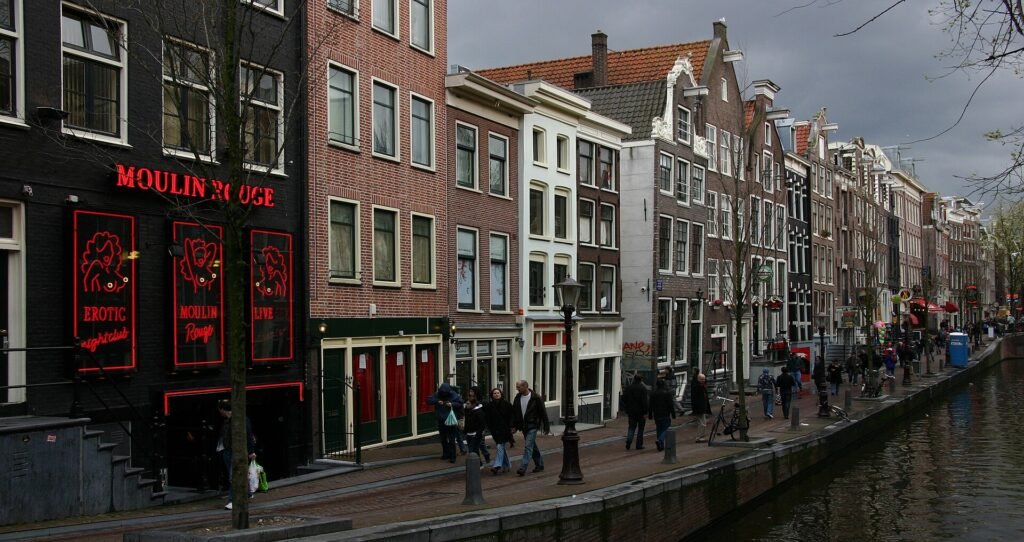
Nowhere is unsafe, but the Red Light District is uncomfortable with young children after dark because of the window displays and the crowds.
Route around De Wallen in the evening and keep to the main lit streets if you have to pass through it.
Can children walk around or near the Red Light District?
Nothing prevents it and plenty of families cross the area in daylight, often without realising, since the Oude Kerk stands in the middle of it.
By evening it is a different place, busy and drunk, and worth a five-minute detour to avoid.