
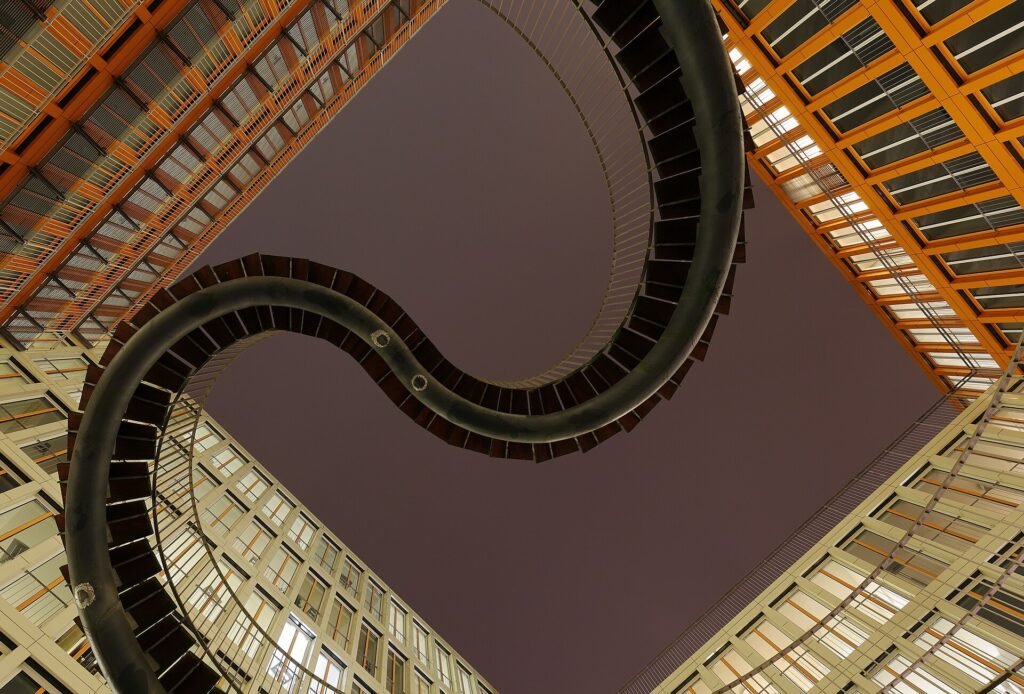
Olafur Eliasson’s artwork Deep seeing currents opened in the Artis Aquarium on Saturday 3 October, inviting visitors to imagine the floor of the deep sea.
The aquarium reopened in June after being closed for years for a major renovation, and around 400,000 people have visited since then.
The work is in a round room on the eastern side of the aquarium building. It was once a lecture hall and later held a dune diorama.
Artis director Rembrandt Sutorius said the diorama was no longer needed because anyone can go to the dunes to see them.
The deep-sea floor is another matter: “More people have been to the moon than to the bottom of the deep sea.”
The new aquarium shows almost every level of marine life except the deep-sea floor, even though 90 percent of the world’s water is deep sea.
Sutorius first contacted the Danish-Icelandic artist two and a half years ago and invited him to spend two days at Artis, day and night.
After that, Eliasson and his team agreed to take on the project.
Sutorius knew his work from The Weather Project at Tate Modern and from several pieces in Denmark.
Darkness, sound and light
Eliasson made some of the sound recordings himself while diving in the Pacific with his son.
He also used recordings from scientific institutions, including the Royal Netherlands Institute for Sea Research (NIOZ).
Because of the great depth, all the sounds are low, below 20 hertz.
They include the blue whale and what the artist calls “marine snow”: sounds that drift down from man-made objects such as ships.
Heavy curtains running from ceiling to floor keep daylight out of the room, which forms a half-circle tunnel.
Eliasson’s own poem Deep seeing currents is displayed at one end in English, with a Dutch translation.
Halfway along is the entrance to a pitch-black space.
Your eyes adjust within a minute, and stepping towards the middle you notice the floor is uneven, like the seabed.
Inside, low droning tones alternate with silence among small points of white and red light. The white lights stand for animals.
The red ones stand for the sounds of earthquakes as tectonic plates move against each other.
For more art around town, check out our guide to the best art galleries in Amsterdam.
![Top [count] Travel Blogs to Follow - OnToplist.com](https://www.ontoplist.com/images/ontoplist31.png?id=6a8dcf108f478)