
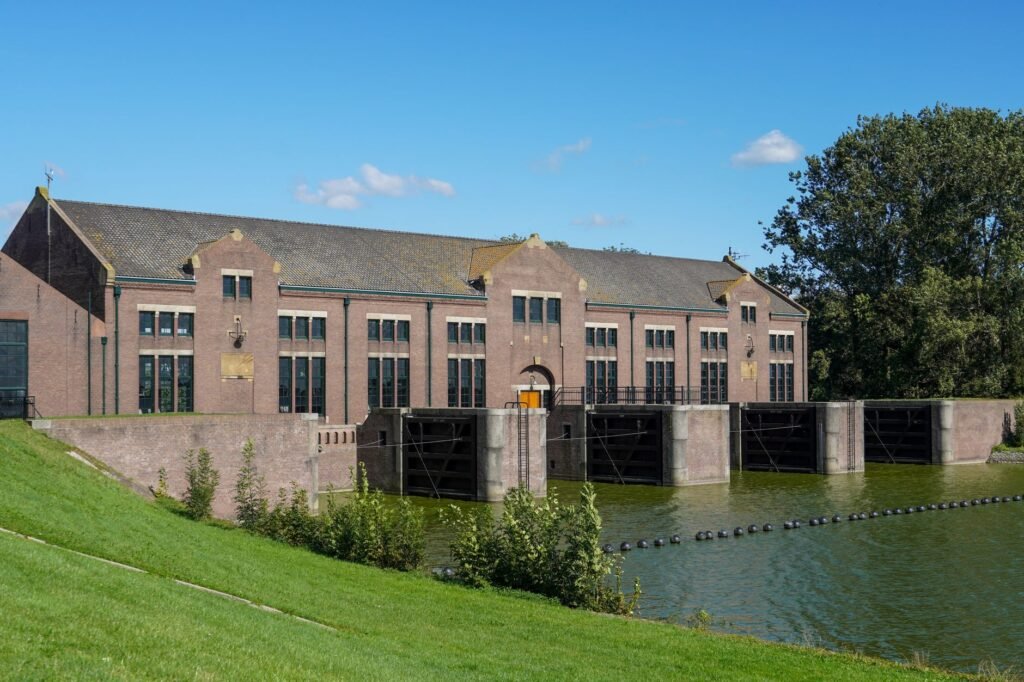
Situated along the banks of the Amsterdam-Rhine Canal, Gemaal Zeeburg plays a vital role in keeping Amsterdam safe from extreme weather.
Operated by the regional water authority Waterschap Amstel, Gooi en Vecht, the pumping station helps route excess city water directly into the IJmeer.
First established in 1879 as a steam-powered facility, the current electric pumping station was built in 1943 during the Second World War.
Its original function was flushing out polluted canal water, but modern sanitation connections for houseboats and canal houses have drastically reduced that daily need since 2010.
How the station protects the city today
These days, the station’s four massive electric pumps run only a few times a year, usually after sudden intense rainfall or when regional facilities face technical issues.
During heavy storms, the system prevents sudden urban flooding and safeguards localized events across the municipal canal system.
Whenever the station activates, dynamic warning lights signal nearby residents and boaters.
Strong underwater currents pose potential hazards to swimmers and unanchored vessels, while neighboring residents on Cruquiuseiland are given notice of operational noise.
Upgrades planned for a municipal monument
Maintaining the station requires regular physical inspections, with staff constantly monitoring water intake and safety conditions.
Because the facility was designed by the architects responsible for Amsterdam Amstel station, it holds official municipal monument status.
Long-term plans are now being considered to modernize the aging structure to better withstand shifting climate patterns, heavy rainfall, and prolonged droughts.
Officials must balance high energy consumption and structural insulation requirements against the strict preservation rules applied to protected historic architecture.
Public access is offered periodically through open days, including scheduled visits on September 12 and 13.
The site also features notable design elements, including four stone lion statues placed along the siphon houses.
Curious about the preservation challenge? Read about new approaches to conserving Amsterdam’s historic buildings.

![Top [count] Travel Blogs to Follow - OnToplist.com](https://www.ontoplist.com/images/ontoplist31.png?id=6a8dcf108f478)