
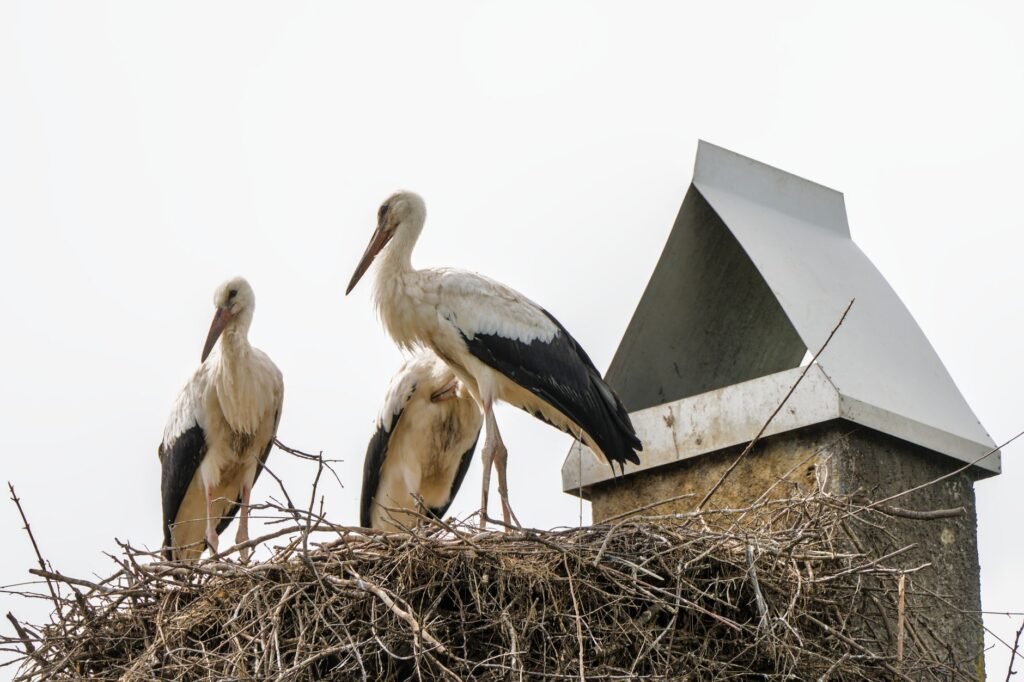
White storks have completed a remarkable recovery in the Netherlands, with monitoring organization Sovon recording approximately 2,000 breeding pairs nesting across the country last year.
The figure represents a sharp contrast to the early 1980s, when the nationwide population had dropped to just 16 active pairs.
The impact of pesticides
The species was nearly wiped out mid-century, primarily due to the widespread agricultural use of the pesticide DDT after World War II.
The chemical persisted in soil for decades, devastating local bird populations before the Netherlands implemented a total ban in 1973.
To prevent local extinction, Vogelbescherming Nederland launched a targeted recovery program during the late 1960s.
Conservationists bred storks in captivity and systematically reintroduced them into natural habitats throughout the 1970s, 1980s, and 1990s.
Growth and seasonal migration
The breeding initiatives proved successful, allowing storks to be officially removed from the Dutch Red List of threatened species in 2004.
Experts at the Stork Research & Knowhow Foundation report that population numbers have continued to expand steadily almost every year since.
The annual migration south is currently underway as August marks peak departure season.
Younger birds typically head south first to establish independent routes toward Spain or West Africa, where they often remain for several years before returning to breeding grounds in the Netherlands.
Want to spend more time outdoors? Explore our guide to nature in and around Amsterdam.


![Top [count] Travel Blogs to Follow - OnToplist.com](https://www.ontoplist.com/images/ontoplist31.png?id=6a8dcf108f478)