
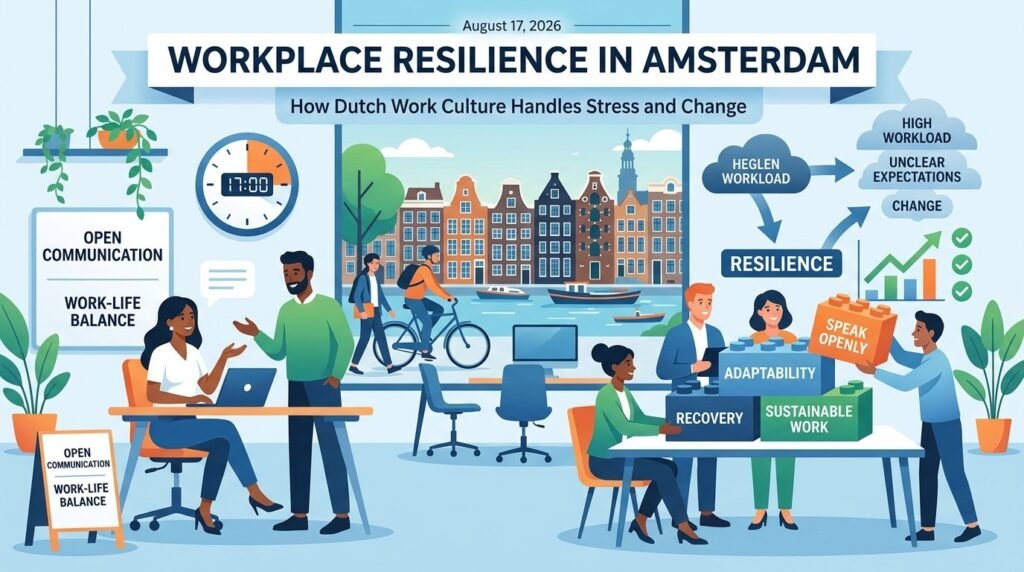
Amsterdam workplaces are often associated with direct communication, relatively flat hierarchies, flexible working arrangements and a strong separation between work and private life.
Those characteristics can make teams adaptable, but they do not automatically make them resilient.
A workplace can be informal and flexible while still leaving employees exposed to unclear expectations, heavy workloads or constant change.
For people working in Amsterdam – particularly in international companies where Dutch and non-Dutch working styles meet – resilience is therefore less about simply coping with pressure and more about creating a culture in which people can recover, speak openly, adjust quickly and keep work sustainable over time.
Understanding Resilience in the Dutch Workplace
Resilience in the workplace enables organizations and individuals to navigate challenges effectively.
It strengthens organizational culture and supports continuous adaptability, crucial for thriving in dynamic environments.
In Amsterdam, where many workplaces are international and teams may be dealing simultaneously with growth, restructuring, hybrid work and cultural differences, that adaptability can be especially important.
Defining Workplace Resilience
Workplace resilience refers to the ability of employees and organizations to withstand pressures and recover quickly from setbacks.
It involves maintaining a positive outlook, staying productive amid challenges, and utilizing available resources effectively.
Key attributes include flexibility, problem-solving, and stress management.
Individuals can build personal resilience through skill development, while organizations foster it through supportive cultures and structured practices.
Creating an environment where resilience can thrive encourages innovation and employees’ well-being.
It also enhances overall job satisfaction, performance, and retention rates.
In a Dutch context, this fits naturally with the emphasis many employees place on autonomy, predictable working hours and having a life outside the office.
The Role of Leadership in Fostering Resilience
Leadership plays a pivotal role in cultivating resilience within the workplace.
Effective leaders guide their teams by modeling resilient behaviors, such as open communication and adaptability.
That matters in Dutch organizations, where hierarchy is often less visible than in more top-down business cultures and employees may expect to be able to question decisions or speak relatively freely with managers.
They support their employees through clear expectations and constructive feedback.
Leaders also play a crucial role in establishing a resilient organizational culture.
This involves promoting a safe environment where employees feel empowered to take risks and learn from failures.
A flat structure only helps if responsibility remains clear: informality should not become ambiguity about who decides, who supports the team or who is accountable when something goes wrong.
Leadership training programs that focus on resilience can also prepare managers to better support their teams.
They also enhance resilience through emotional intelligence and conflict resolution skills.
How Covid-19 Changed Dutch Workplace Adaptability
The Covid-19 pandemic significantly tested workplace adaptability and resilience.
Organizations had to swiftly transition to remote work, adapt to changing regulations, and address employees’ mental health concerns.
Amsterdam offices were no exception, and for many knowledge workers the rapid move between office and home accelerated expectations around hybrid and flexible work.
This period highlighted the importance of flexibility and proactive planning.
Companies that embraced digital transformation and supported employee well-being successfully maintained productivity.
Resilience became a key focus, with organizations implementing strategies to improve workforce agility.
These included investing in technology, offering mental health resources, and promoting flexible work arrangements.
The pandemic underscored the necessity for businesses to foster a resilient workforce, capable of navigating unprecedented challenges.
Strategies for Building Resilience Among Employees
Fostering resilience in the workplace involves equipping employees with tools for resilience training, enhancing emotional well-being, and promoting a balance between work and personal life.
These strategies are crucial for developing a robust workforce.
Resilience Training and Personal Growth
Resilience training programs focus on equipping employees with skills to adapt to stress and changes.
Workshops can teach techniques such as problem-solving, stress management, and adaptability exercises.
Offering mentoring or coaching helps reinforce these skills, enabling employees to integrate them into daily routines.
Encourage personal growth by setting realistic goals and supporting continuing education.
By regularly setting new challenges, employees remain engaged and motivated.
Recognizing achievements fosters a growth mindset, essential for building long-term resilience.
Enhancing Emotional Resilience and Regulation
Supporting emotional resilience requires creating environments where employees feel comfortable expressing concerns and emotions.
Encourage open communication and provide access to counseling services.
Training in emotional intelligence helps employees understand and manage their emotions effectively.
Incorporate regular feedback cycles to allow employees to voice challenges.
Equip them with tools to regulate emotions, particularly during stressful situations.
This could include mindfulness practices or stress-reduction techniques, contributing to a more emotionally balanced workforce.
Self-Care Techniques and Work-Life Balance
Promote a culture that prioritizes self-care by offering flexible working hours or remote work options where the job allows it.
Encourage employees to take breaks and use annual leave to recharge.
This can fit well with Dutch working culture, where protecting time outside work is often treated as a normal part of a sustainable career rather than a lack of commitment.
Providing resources on stress-reducing activities like meditation or exercise can support overall well-being.
Work-life balance is critical.
Encourage setting boundaries by disconnecting from work-related communications during personal time.
In Amsterdam, a team that says it values balance but routinely expects evening WhatsApp replies or late-night Slack responses is sending two contradictory messages.
Clear norms around availability matter more than slogans.
Genuine separation from work fosters relaxation and rejuvenation, enabling employees to maintain productivity and resilience at work.
Regular workshops on time management can further aid in setting effective boundaries.
Creating a Supportive Organizational Environment
In the workplace, fostering a supportive environment prioritizes empathy, structured support systems, and psychological safety.
These components contribute to well-being and enhance team dynamics.
Balancing Dutch Directness With Empathy
Establishing a workplace culture centered on empathy and compassion involves intentional actions.
Dutch directness can be an advantage here: problems are easier to address when people are willing to say what they think.
But directness and psychological safety are not the same thing.
In an international Amsterdam team, communication that feels refreshingly clear to one employee can feel unnecessarily harsh to another.
Leaders should encourage open dialogue where employees feel heard and understood.
Training that focuses on emotional intelligence and cross-cultural communication can help staff relate better to colleagues, reducing conflicts and fostering connections.
Showing genuine concern for employees’ well-being translates into an investment in their overall job satisfaction and productivity.
Recognize milestones and offer positive feedback, which can enhance morale and a sense of belonging.
A compassionate workplace not only attracts but also retains talent, creating a more resilient organizational structure.
Establishing Robust Support Systems and Networks
Organizations should design support systems that are accessible and responsive to employee needs.
Depending on the employer, this may include an Employee Assistance Program, access to occupational-health support, coaching, mentoring or a confidential point of contact.
Internal networks and peer support groups can also promote connection and shared knowledge – particularly in Amsterdam companies where a large share of the workforce may have moved to the Netherlands without an established local support network.
Creating networks that bridge departmental gaps enhances collaboration and strengthens the organizational culture.
Structured feedback mechanisms allow employees to express concerns and suggest improvements, contributing to a dynamic and supportive work environment.
A well-integrated support system reflects a commitment to employee well-being and can significantly reduce workplace stress.
Psychological Safety and Healthy Team Dynamics
Psychological safety is crucial for effective team dynamics.
It ensures employees feel safe to express ideas and opinions without fear of negative consequences.
This is an important distinction in workplaces that pride themselves on openness and flat hierarchy: being allowed to disagree with your manager is useful only if doing so does not quietly damage your position.
Managers should foster an environment where taking risks, raising concerns and voicing unorthodox ideas are genuinely encouraged and respected.
Integrating regular team-building activities can enhance trust and cooperation among team members.
It is important to address conflicts promptly and constructively, reinforcing respect and collaboration.
Transparent communication of expectations and goals plays a key role in maintaining healthy dynamics.
By prioritizing psychological safety, you create a workplace where innovation thrives, and teams are more adaptable to change.
Addressing Challenges and Setbacks in the Workplace

Navigating workplace setbacks involves managing stress, overcoming adversity, and building team cohesion.
Employing strategies to handle these elements effectively fosters a resilient work environment.
Managing Stress and Preventing Burnout
Workplace stress is a common issue that can easily lead to burnout if not addressed.
Amsterdam’s reputation for work-life balance does not make individual workplaces immune to overload.
Fast-growing companies, understaffed teams, restructurings and always-on international operations can create sustained pressure even in organizations with flexible schedules.
Prioritizing self-care, such as regular breaks and a healthy work-life balance, helps mitigate stress.
Mindfulness techniques, like meditation or breathing exercises, can also be beneficial.
Establishing an organized workflow minimizes overwhelming workloads.
Use tools like task management apps to stay on track and prevent chaos.
It’s crucial to communicate your needs and set boundaries, ensuring your workload remains manageable.
Developing a reliable support network, including colleagues and supervisors, provides a safe space to discuss stressors and share coping strategies.
Organizations can promote employee well-being through workshops and mental health resources, empowering employees to manage stress effectively.
Overcoming Adversity and Trauma
When facing adversity or trauma at work, establishing a supportive environment aids recovery.
Encouragement from peers and supervisors plays a significant role in overcoming these challenges.
Empathy and understanding foster trust, enabling open dialogue about any difficulties encountered.
Access to professional resources, such as counseling or employee assistance programs, ensures timely support for those experiencing trauma.
Encouraging self-reflection and resilience-building activities helps employees process their experiences and develop coping mechanisms.
Incorporating resilience training into employee development plans equips staff with the skills necessary to handle adversity.
Providing opportunities to learn from past setbacks strengthens personal growth and confidence, promoting a more resilient workforce.
Strengthening Team Resilience and Cohesion
Building a resilient team requires fostering strong relationships and open communication.
This is particularly relevant in Amsterdam’s international workplaces, where colleagues can have very different assumptions about hierarchy, feedback, meetings and conflict.
Regular team-building activities improve cohesion and trust among team members, creating a supportive network to tackle joint challenges.
Establishing clear goals and collaborative work practices encourages team empowerment.
When employees feel valued and included in decision-making processes, their commitment to teamwork and innovation increases.
Promoting a culture of continuous feedback and recognition boosts morale, motivating the team to excel.
Celebrating successes and learning from setbacks collectively contributes to team resilience.
By cultivating an environment where team members support each other’s development, organizations can better navigate challenges and strengthen their overall resilience.
Measuring Workplace Well-Being in Amsterdam Organizations

Focusing on workplace well-being involves assessing employee engagement, satisfaction, absenteeism and the impact of workplace culture on mental health.
For Dutch employers, the practical business case is not just a happier workforce: sustained stress can also mean more sick leave, lower retention and loss of productivity.
The Significance of Employee Engagement and Satisfaction
Employee engagement is crucial to enhancing workplace well-being.
Engaged employees tend to have higher morale and productivity levels.
They invest more in their roles, leading to better team performance and long-term retention.
Monitor engagement through regular surveys and one-on-one meetings.
Assess satisfaction by asking about role clarity and growth opportunities.
Feedback loops between staff and management build trust and foster a collaborative environment.
Identify key engagement drivers unique to your organization.
Address these to maintain a motivated workforce that contributes positively to workplace culture and resiliency.
Workplace Culture’s Effect on Mental Health
A supportive workplace culture plays a significant role in maintaining employees’ mental health.
Positive relationships within teams and between staff and management help establish a nurturing atmosphere.
Open communication channels are vital.
They allow employees to express concerns and ideas without fear of judgment.
Encourage a culture where adaptability and resilience are valued to manage stress effectively.
Provide access to mental health resources, such as workshops or counseling services.
This support helps employees manage stress and boosts overall emotional well-being in the workplace.
Reducing Absence and Turnover Through Wellness Initiatives
Well-designed wellness initiatives can support employee resilience and may help reduce stress-related absence and turnover.
These programs emphasize physical, mental and emotional well-being.
Components can include fitness initiatives, mental-health support, coaching, healthier workplace routines or simply better workload management.
Create a holistic wellness strategy with input from employees.
Tailored programs are often more successful in addressing specific needs.
Regular evaluation of these initiatives ensures they remain relevant and effective.
Wellness programs are most useful when they address actual causes of strain rather than treating resilience as an individual employee’s responsibility.
A meditation app will not solve chronic understaffing or unclear priorities.
The strongest approach combines individual support with sensible workloads, clear management and working practices that employees can sustain.
Frequently Asked Questions

Resilience in the workplace involves practical skills that can help navigate challenges.
It includes personal attributes and organizational strategies that benefit both individuals and the larger team.
In Amsterdam and the Netherlands, the most effective approach is usually not to ask employees simply to become tougher, but to combine personal adaptability with clear boundaries, supportive management and an organizational culture in which people can speak openly.
How does one demonstrate resilience in a professional setting?
You demonstrate resilience through adaptability, maintaining perspective during setbacks and proactively seeking solutions.
In a Dutch workplace, that can also mean communicating problems directly, asking for clarity when responsibilities are vague and setting reasonable boundaries before pressure becomes unsustainable.
What are the key components of resilience in an organizational context?
Resilience components in an organization include effective communication, teamwork and an adaptive culture.
Strong support systems, clear goals and flexibility in processes foster a resilient workplace environment.
Relatively flat structures can help, but only when decision-making and accountability remain clear.
Why is resilience important for career progression and workplace dynamics?
Resilience is crucial for career advancement as it enables you to handle stress and recover from difficulties.
It enhances workplace dynamics by promoting effective problem-solving and helping maintain positive relationships.
In what ways can workplace resilience be cultivated among employees?
Employers can cultivate resilience by offering training programs, encouraging open communication and providing appropriate well-being support.
In an Amsterdam workplace, it can also mean setting explicit expectations around hybrid work, availability and feedback so employees from different cultural backgrounds are not left to guess the unwritten rules.
What role does leadership play in fostering a resilient organizational culture?
Leadership is key in setting the tone for resilience by modeling adaptive behaviors and supporting employees through challenges.
Leaders can provide clear direction, recognize effort and encourage innovation.
In a Dutch-style low-hierarchy environment, managers still need to manage: accessibility and informality should not replace decisions, accountability or support.
How can resilience training impact employee performance and well-being?
Resilience training equips employees with skills to manage stress and adapt to changes.
This leads to improved performance and morale.
It enhances well-being by promoting work-life balance and reducing burnout, ultimately contributing to a healthier workplace.



![Top [count] Travel Blogs to Follow - OnToplist.com](https://www.ontoplist.com/images/ontoplist31.png?id=6a8dcf108f478)