
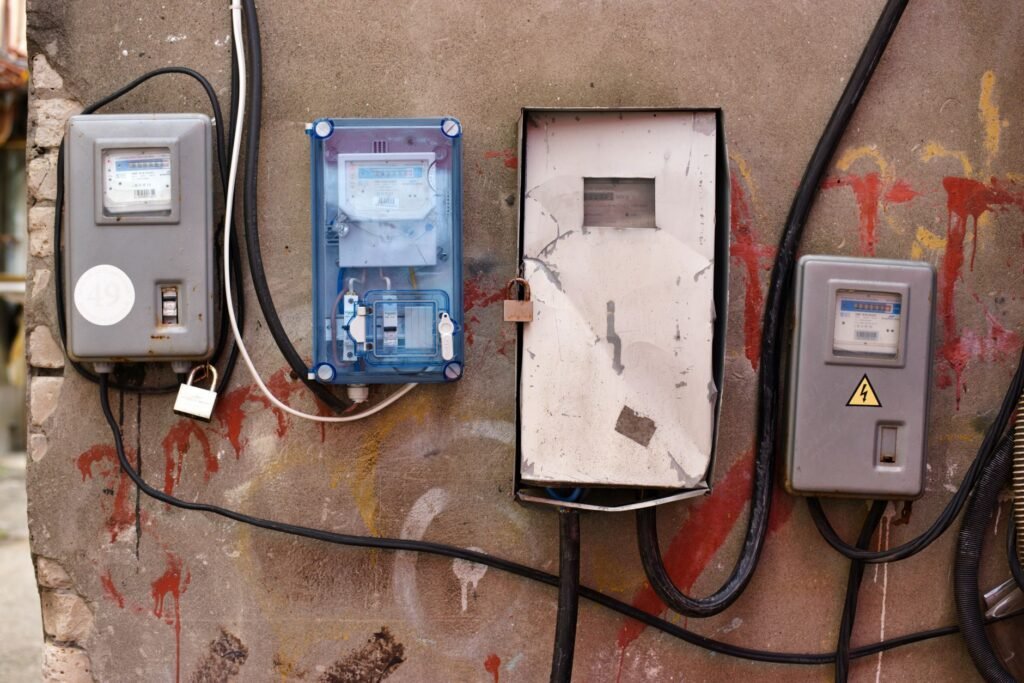
Photograph the gas and electricity meters on the day you get the keys.
That one act settles every argument about the previous occupant’s usage, and it is the step people skip.
Most Dutch homes already have live energy and water connections, so you are transferring services into your name rather than creating them.
Do it in your first week, because an unregistered supply lands on a default tariff that is deliberately expensive.
Setting Up, In Order
You need ID, your rental contract or deed, a Dutch bank account and a BSN.
If the BSN is still pending, an account with a provider that opens on ID alone keeps the rest moving.
Energy: choose a supplier and sign up online.
Your new supplier notifies the grid operator - Liander, Stedin or Enexis depending on region - so there is nothing for you to arrange with them.
Water: nothing to compare, because your supplier is fixed by address.
Find the company for your postcode and register; it takes minutes.
Internet: the only one worth shopping for, and the one with a lead time of one to two weeks.
Run a postcodecheck before you commit - the internet guide covers what is available where, and the mobile guide covers combination deals.
Electricity, Gas And Heating
The Dutch energy market has been fully liberalised since 2004: the grid operator delivers, and you choose and pay a separate retail supplier.
You cannot choose the grid operator and you should never pay them directly.
Choosing A Supplier
Essent, Vattenfall, Eneco, Engie and Greenchoice are the large suppliers.
Budget Energie, Frank Energie, Tibber, Oxxio and Energiedirect compete on price, and Vandebron, Pure Energie and Innova sell contracts backed by named Dutch wind and solar.
Energievergelijk.nl and Independer both compare by monthly cost, contract length and source.
Fixed-rate contracts lock the price for one to three years; variable contracts move with the market and can be cheaper or considerably worse.
Read the termination fee before signing a fixed contract, because leaving one early is charged.
Suppliers also quote a monthly termijnbedrag, an estimated instalment reconciled once a year - if it is set too low you get a large bill in month thirteen.
What It Costs
A typical household pays in the region of €140 a month for gas and €50 for electricity, but the spread is enormous.
A detached house with a poor energy label can double the gas figure; a well-insulated flat can halve it.
Your bill has three parts: the energy you use, fixed delivery charges, and energy tax.
Every connection also receives an annual energy-tax rebate credited against the bill, which is why the first year’s reconciliation rarely matches the monthly instalments.
Some newer developments use stadsverwarming, district heating from a central plant, and there is no supplier to switch to.
Those tariffs are regulated by the ACM, so check the published maximum if a bill looks wrong.
Insulation and a heat pump are the levers that actually move this number - see the renovation guide for what qualifies for subsidy.
Water
Dutch tap water is drawn largely from groundwater, treated to strict standards and supplied without chlorination.
Buying bottled water here is spending money on something worse.
Ten regional companies supply drinking water and you are assigned to one by address: Waternet in Amsterdam, Dunea along the South Holland coast, Evides in Rotterdam and Zeeland, Vitens across much of the east and centre, Brabant Water, Waterbedrijf Groningen and WML in Limburg among them.
Enter your postcode on the relevant company’s site to register.
Expect roughly €8 to €15 a month, billed annually or half-yearly against a meter reading or an estimate.
The bill combines a fixed connection charge with a rate per cubic metre.
The Bills That Do Not Come From A Utility
Your gemeente sends a separate annual tax bill, and it is the one newcomers do not budget for.
It arrives in the spring and can be paid in instalments by direct debit if you ask.
Afvalstoffenheffing is the household waste charge, set annually by your municipality and usually at two rates: one for single-person households and a higher one for everyone else.
Amsterdam sits at the higher end nationally, and the current figures are published on amsterdam.nl.
Waterschapsbelasting is levied by your regional water authority for flood defence, water quality and wastewater treatment.
Tenants and owners both pay it; owners pay an additional component tied to the property.
OZB, property tax, is charged to owners only and calculated from the WOZ valuation the municipality sets each year.
Check that valuation when it arrives, because you can object to it and a successful objection lowers the tax.
Together these add roughly €50 to €100 a month to the cost of a home, on top of everything above.
Fold that into your cost of living and your tax planning, and read the recycling guide so the waste charge is the only thing your bins cost you.
Related reading
In the news
- Dutch household energy bills jump in 2027 18 September 2026
- Amsterdam households face higher energy network costs 16 September 2026
- Regulator warns of rising district heating bills under new rules 6 August 2026
- Amsterdam heating cooperative receives €30 million grant for Middenmeer district grid 31 July 2026
- Dutch households face fines for refusing smart energy meters 28 July 2026

![Top [count] Travel Blogs to Follow - OnToplist.com](https://www.ontoplist.com/images/ontoplist31.png?id=6a8dcf108f478)