
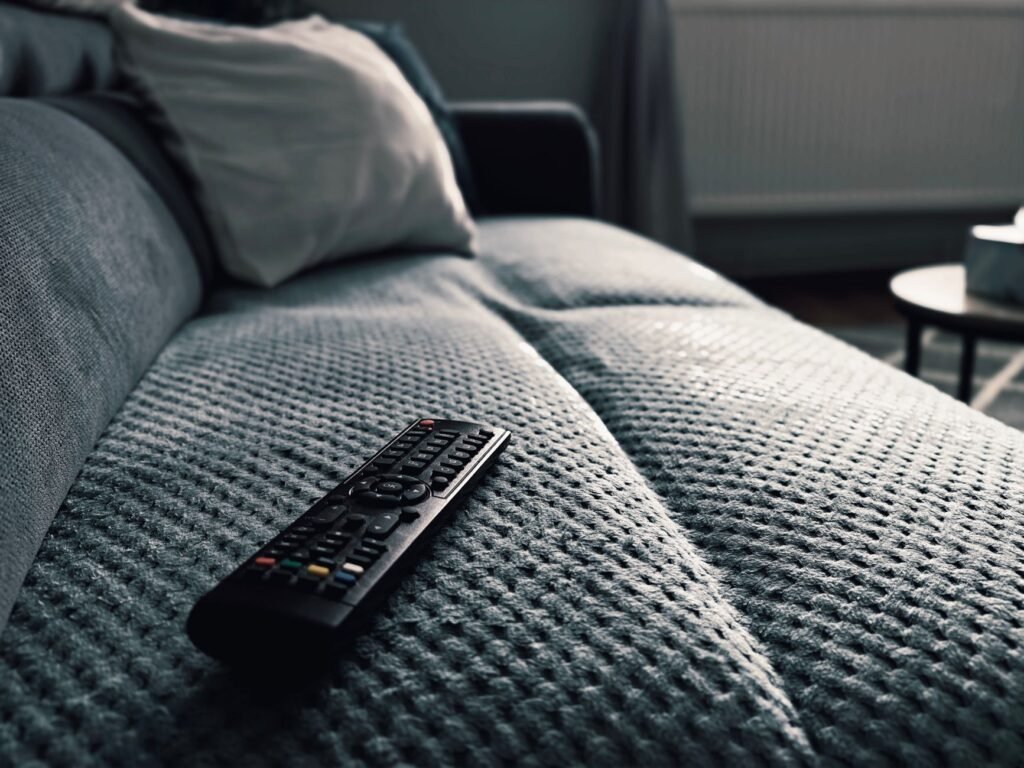
There is no TV licence fee in the Netherlands.
Public broadcasting is paid for out of general taxation, so nobody knocks on the door and no annual bill arrives - a change worth knowing if you have moved from the UK, Germany or Austria.
What you do have to decide is how the signal reaches your flat, and there are only three real answers: a fixed line from a provider, an aerial, or nothing but the internet you already pay for.
The Netherlands switched off analogue broadcasting in 2006, earlier than almost anywhere in Europe, so every option below is digital and every television sold here handles HD.
If you are still working through the move itself, the checklist for moving to the Netherlands covers the rest of the setup.
If you still need to book a move, our directory of Amsterdam movers and storage firms lists local options.
The Aerial Option Most Expats Never Hear About
Digitenne is the country’s terrestrial platform, run by KPN over DVB-T2, and it is the only way to watch broadcast television without a fixed line contract.
The part worth knowing is that the three national public channels, NPO 1, NPO 2 and NPO 3, plus your regional public channel, are free to air on that signal.
A DVB-T2 aerial costs somewhere between €30 and €80 and a standalone receiver another €60 to €120, after which those channels cost nothing at all each month.
The paid Digitenne subscription runs about €18 a month and opens up roughly twenty-five channels including RTL 4, SBS 6, Net5 and Veronica.
That suits a short posting, a houseboat, a holiday let or anyone unwilling to sign a one-year contract for a flat they may leave in six months.
Coverage is national but not uniform, and reception indoors in a ground-floor flat surrounded by brick is genuinely worse than on a top floor.
Ask the estate agent or the previous tenant before buying an aerial rather than after.
A local handyman found through our directory of Amsterdam handymen and contractors can mount it properly if the roof or window ledge is awkward.
Watching Through A Provider
Most Dutch households take television as part of an internet bundle instead, which is where the connection at your address decides everything.
The postcode check, the difference between cable, DSL and glasvezel, and what each provider charges are all covered in the guide to internet options in the Netherlands, so this is the television-specific part.
A standard alles-in-1 package from Ziggo, KPN or Odido runs roughly €40 to €70 a month and carries the Dutch channels plus a familiar English-language set - BBC World News, CNN, Discovery, National Geographic and Eurosport.
Budget Thuis sits below that at around €30 to €40 for a stripped-back package on someone else’s network.
Both Ziggo and KPN include an app, Ziggo GO and KPN TV, that carries the same live channels and a catch-up archive to a phone or tablet.
Those apps are geo-locked to the Netherlands, which matters if you were planning to watch from abroad.
The trap in every provider’s pricing is the first-year discount.
Contracts routinely step up in month thirteen, so read the second-year figure in the contract summary before signing and budget from that number rather than the advertised one.
Switching later is easier than it sounds because of the overstapservice: your new provider cancels the old contract and schedules the changeover, and you are not left with two bills or a dead line in between.
What You Actually Get To Watch
Dutch television subtitles foreign programming rather than dubbing it, so films and series air in the original language with Dutch text along the bottom.
The one exception is children’s programming, which is dubbed into Dutch, and it is the reason expat parents notice their five-year-old learning the language faster than they are.
Dutch subtitles for Dutch programmes are hidden on teletext page 888, which is the single most useful button on the remote if you are learning the language.
Hearing a sentence and seeing it written at the same time does more in a month than most textbooks.
On the streaming side the Dutch-specific names are NPO Start, which carries the public broadcasters’ back catalogue, and Videoland, RTL’s subscription service.
Netflix, Disney+, Prime Video and HBO Max all operate here with a Dutch catalogue that differs from the American one, so a title you had queued at home may simply not be in the library.
Providers increasingly sell internet without television at all, which is the honest choice if everything you watch already arrives through an app.
Adding a mobile plan from the same company sometimes trims the bill, and the guide to mobile phone plans in the Netherlands covers whether that is worth doing.
Radio, Including The English Question
There is no English-language FM or DAB+ station broadcasting nationally in the Netherlands, and any guide implying otherwise is selling you something that does not exist.
What there is instead is worth setting out plainly.
The BBC World Service streams free worldwide through the BBC Sounds app, while most BBC network radio is rights-restricted to UK listeners on the same app.
TuneIn and similar directories carry the rest, and a smart speaker will find any of them by name.
The nearest thing to English radio on the actual airwaves is Dutch commercial radio, where the presenters speak Dutch but the playlists are overwhelmingly English-language.
Sky Radio, Radio 538, Qmusic, Radio 10 and Veronica all sit in that category, and Sublime is the one to find for jazz and soul.
The public stations split by job: NPO Radio 1 is news and sport, Radio 2 mainstream pop, 3FM younger and guitar-heavy, Radio 4 classical and Radio 5 older repertoire and talk.
Radio 1 is the station Dutch drivers put on when something has happened.
DAB+ coverage is national, and any car sold new in the EU since December 2020 has a DAB+ receiver built in.
FM still works everywhere, so an old kitchen radio is not yet scrap.
Getting the internet live at your address is what unlocks most of this, and the guide to setting up utilities in the Netherlands covers the order to do it in.
![Top [count] Travel Blogs to Follow - OnToplist.com](https://www.ontoplist.com/images/ontoplist31.png?id=6a8dcf108f478)