
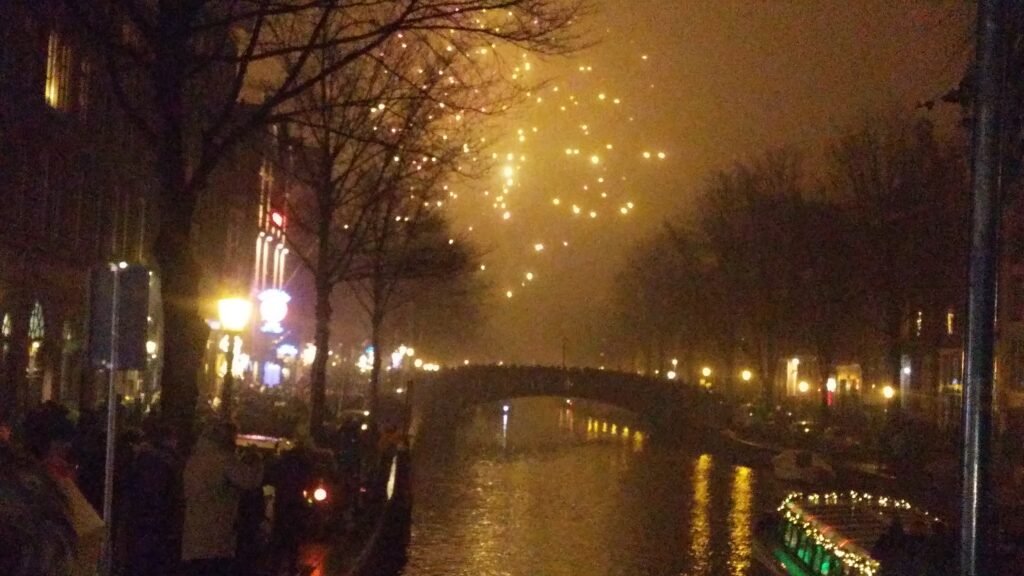
A national ban on buying and setting off consumer fireworks officially went into effect this month across the Netherlands.
Under the new rules, residents can no longer purchase or ignite category F2 or stronger consumer fireworks, such as rockets and compound boxes, during New Year’s Eve.
Only light items in category F1, including sparklers and small novelty poppers, remain legally permitted for public use.
Exceptions and local policies
The national legislation allows local clubs, neighborhood groups, and formal associations to apply for specific exemption permits if they want to organize group displays.
To qualify, these organizations must prove a clear connection to the neighborhood and submit detailed safety plans, firing schedules, and site layouts to local officials.
However, the municipality of Amsterdam is among several major Dutch cities that have decided not to accept any applications for these exemptions.
Other local authorities taking the same stance include Rotterdam, Breda, Maastricht, and Delft, effectively keeping a total prohibition on stronger fireworks within their city limits.
Low permit demand and enforcement concerns
In municipalities that are accepting exemption requests, initial interest has been very limited.
This matches earlier reports that Dutch cities see almost no requests for consumer fireworks ban exemptions due to the strict administrative requirements involved.
A recent survey by RTL Nieuws indicated that compliance may pose a challenge for authorities nationwide.
Over half of the active firework users surveyed said they still intend to set off fireworks on New Year’s Eve regardless of whether they have a permit or if a ban is in place.
Local authorities and law enforcement have previously faced difficulties enforcing municipal firework bans over recent years.
Staff shortages and safety concerns on crowded streets on New Year’s Eve continue to present practical obstacles for police officers on duty.
For more on local celebrations, read our guide to New Year in Amsterdam.

![Top [count] Travel Blogs to Follow - OnToplist.com](https://www.ontoplist.com/images/ontoplist31.png?id=6a8dcf108f478)