
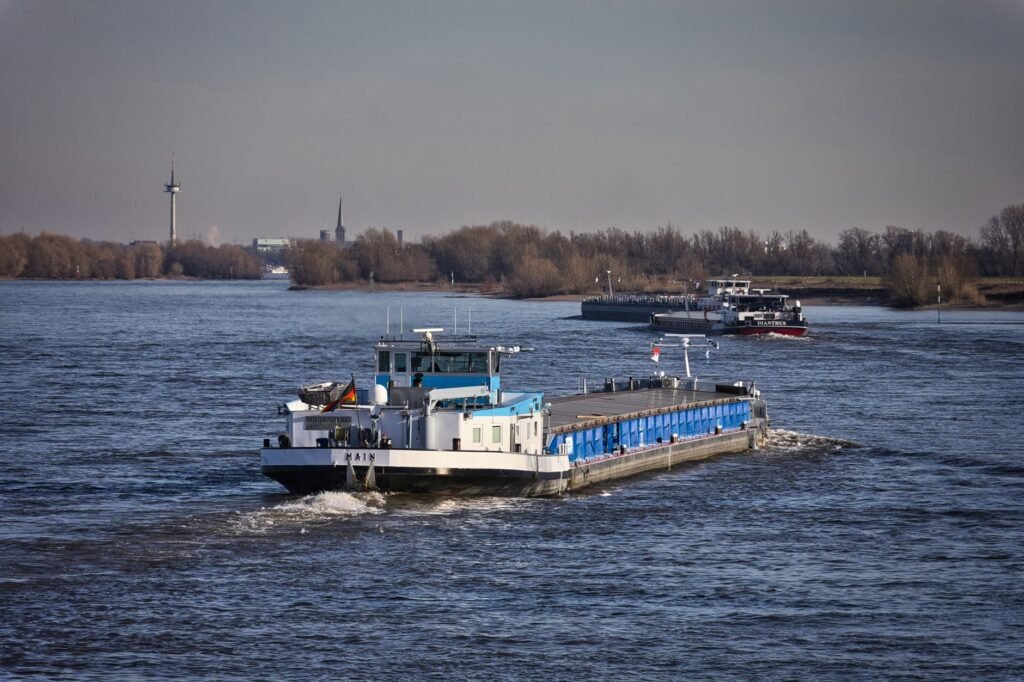
Extremely low water levels in the Rhine are threatening to disrupt inland shipping between the Netherlands and Germany as a key bottleneck becomes nearly impassable.
The critical point is located near the German town of Kaub, where the river is naturally shallow.
If water levels drop further, cargo vessels may no longer be able to pass through, effectively cutting off shipping routes between Dutch ports and industrial regions in southern Germany.
Crucial shipping bottleneck
Industry association Koninklijke Binnenvaart Nederland has warned that continuous dry weather could soon make navigating past Kaub impossible.
The warning comes as water discharge measurements for the Rhine at the Dutch border entry point near Tolkamer dropped to record lows.
German inland navigation representatives have expressed similar concerns about a potential split in the river.
A total stoppage at Kaub would block direct freight transport along the Middle and Upper Rhine, affecting international supply chains, manufacturers, and logistics operators across the region.
Challenges finding alternative transport
Replacing river barges with alternative transport presents severe logistical challenges.
A single inland cargo ship carries as much freight as dozens of standard road trucks, making full road displacement impractical.
German economic researchers estimate that moving just the petrol and diesel usually transported along the Rhine would require around 3,000 tank trucks per day.
Shifted entirely to the roads, that extra traffic would add significant pressure to regional highway networks.
Potential temporary transfer points
To keep goods moving, logistics companies are examining partial solutions that use water transport as far as possible.
One proposal involves setting up temporary transfer hubs along sections of the river that remain navigable.
Under this plan, cargo would travel by ship up to the shallow bottleneck, unload onto trains or trucks to bypass the dry stretch, and reload onto another vessel on the other side.
However, industry representatives note this method is not suitable for all goods, particularly heavy or indivisible industrial loads.
Boats are already running with significantly reduced cargo loads to sit higher in the water.
Extended low water issues follow broader national water management challenges caused by prolonged dry spells, which have already required emergency measures across Dutch waterways.

![Top [count] Travel Blogs to Follow - OnToplist.com](https://www.ontoplist.com/images/ontoplist31.png?id=6a8dcf108f478)