
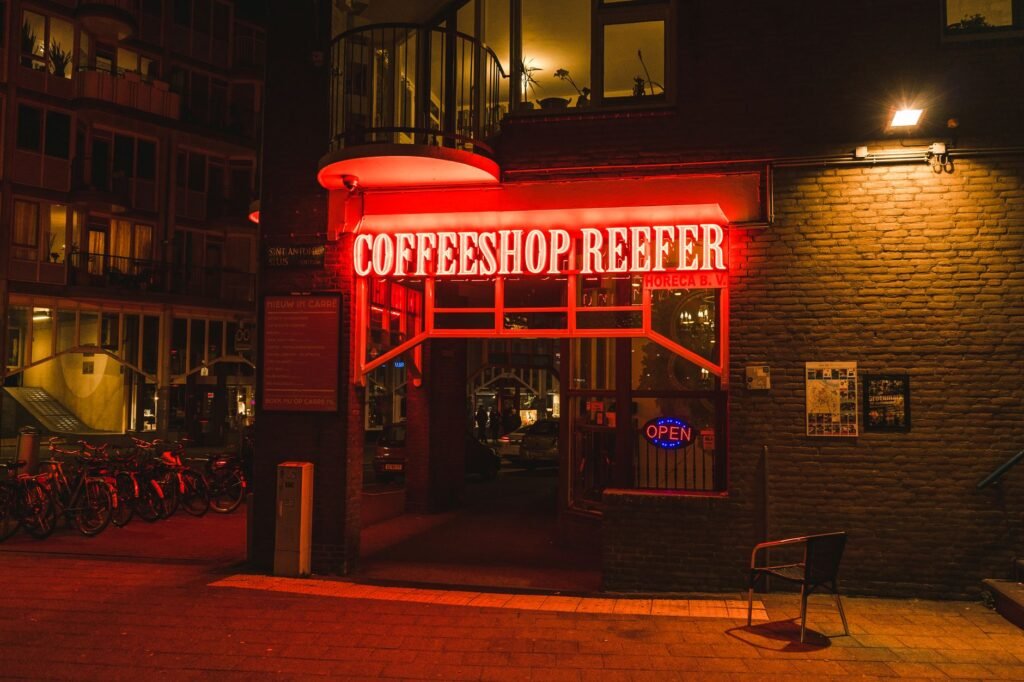
Who Can Buy, and What ID You Need
The legal minimum age to buy or use cannabis in the Netherlands is 18.
Coffeeshops check ID at the door, so bring a passport or another valid photo ID every time.
Staff are required to refuse anyone who cannot prove they are old enough, no exceptions.
How Much You Can Buy and Carry
Dutch tolerance policy sets a limit of 5 grams of cannabis per person per day.
That figure covers what you buy and what you carry at once, not a running weekly total.
Buying more than that, or carrying more than that on the street, moves you outside the tolerated amount and into fine or prosecution territory.
What a Coffeeshop Will Not Sell You
Coffeeshops sell soft drugs only, cannabis and hashish.
They cannot sell or serve alcohol, and cigarettes are increasingly restricted too under the national smoking ban on tobacco indoors.
Hard drugs are illegal everywhere in the Netherlands, coffeeshops included, and staff will not have or handle them.
The License That Makes One Legal
Every real coffeeshop operates under a municipal license and is required to display it, along with a green-and-white sticker, somewhere visible near the entrance.
That sticker is the quickest way to confirm the business is tolerated by the city rather than an unlicensed seller.
Coffeeshops are also barred from advertising, so a shop with a shouty sign or a street tout pushing you toward it is a signal to be cautious, not a marketing choice a licensed business would make.
Smoking Rules Outside the Shop
You are only permitted to smoke cannabis inside a coffeeshop, or on its terrace if it has one.
Since May 2023, Amsterdam has enforced a public smoking ban covering Dam Square, the Red Light District, Damrak, and Nieuwmarkt, with a fine of around 100 euros for smoking cannabis in the open air there.
Outside those specific zones the general rule still applies: cannabis is for coffeeshops, not the sidewalk, a park bench, or a hotel balcony.
Where They Cluster
A large share of Amsterdam’s coffeeshops sit in and around the Red Light District, which has its own set of visitor rules worth knowing before you go, covered in our guide to the Red Light District.
That overlap is a big part of why the area draws heavy foot traffic in the evening, so plan for crowds if you are heading there after dark.
Basic Etiquette Inside
Coffeeshops are social spaces as much as retail counters, and many have seating, music, and sometimes a menu of drinks that are not alcoholic.
Order at the counter, keep your voice down, and do not photograph other customers without asking.
Mixing cannabis with more than a small amount of alcohol beforehand is a common way for first-timers to end up feeling sick, so most staff will suggest going easy on both in the same evening.
If You Are New to This
Start with a small amount and wait to feel the effect before buying or smoking more; edibles in particular take far longer to hit than smoking does, and dosing them wrong is the single most common way visitors have a bad night.
Our separate guide to edibles in Amsterdam covers dosing and risk in more detail if that is the route you are considering.
General visitor etiquette in the city, from how to behave in shops to how Amsterdammers expect tourists to act in residential streets, is covered in our Amsterdam customs and etiquette guide.
A Short History
Coffeeshops date to the 1970s, when the Dutch government drew a legal line between hard and soft drugs and began tolerating regulated soft-drug sales as a way to keep users away from harder substances.
The first, Mellow Yellow, opened in 1972.
Coffeeshops have never been fully legal in the strict sense; they operate in a policy of tolerance, which is why the license and the sticker in the window still matter.

![Top [count] Travel Blogs to Follow - OnToplist.com](https://www.ontoplist.com/images/ontoplist31.png?id=6a8dcf108f478)