Amsterdam’s nightlife runs on three separate circuits that barely overlap: the square-side bars around Leidseplein and Rembrandtplein, the brown cafés of the older residential streets, and the warehouse clubs out on the industrial edges.
Which one you pick matters more than which venue you pick, because the door policies, closing times and prices are different in each.
This Amsterdam nightlife and entertainment guide covers where each circuit is, what happens at the door, and what to do when the music stops.
One warning before anything else: Amsterdam loses club spaces regularly, usually to redevelopment rather than to failure.
De School closed its Jan van Galenstraat home and has not reopened there.
Check a venue’s own site or socials the week you travel, not a list written months earlier - including this one.
Where To Go Out By Area
Leidseplein is the square everyone finds first.
The two side streets that matter are Lange Leidsedwarsstraat and Korte Leidsedwarsstraat, both lined end to end with international bars, comedy rooms and the entrances to the big music venues.
It is loud, it is packed from Thursday onwards, and it is the easiest place in the city to have a night out without planning one.
Rembrandtplein sits about fifteen minutes’ walk east and draws an older, more mixed crowd into more mainstream clubs, cocktail bars and heated terraces.
Reguliersdwarsstraat runs off the square and is the centre of Amsterdam’s LGBTQI+ nightlife, with bars and dance floors open most nights of the week rather than only at weekends.
Dam Square is a place people cross at night rather than stop in.
Walk south towards Weteringschans or east into De Wallen and you reach somewhere that actually has venues.
The Red Light District, De Wallen, has bars and live music among the windows, but it is a tourist circuit and most residents drink elsewhere.
The Jordaan is the opposite proposition: narrow streets, brown cafés and wine bars, conversation you can hear over.
Last orders come earlier here than on the squares, so treat it as the start of a night or the whole of a quieter one.
De Pijp does something similar with a younger crowd and more food.
Want more neighbourhood tips?
Sign up for the Essentially Amsterdam newsletter.
Best Venues For Clubs, Concerts, And Alternative Nights
Line-ups matter more than addresses in this city, so check what is actually programmed on the night rather than turning up at a famous name.
Melkweg and Paradiso are the two large multi-room venues near Leidseplein, both running live concerts across the week and club nights at weekends.
Paradiso occupies a former church, which is why the main hall has a balcony wrapped round three sides and unusually good sightlines from the back.
Bimhuis, in the black box jutting out of the Muziekgebouw by the IJ, is the city’s jazz and improvised-music room and one of the few venues where a seated audience is the norm.
Club NYX on Reguliersdwarsstraat spreads themed nights over several floors and is the mainstream club most reliably comfortable for a queer crowd.
The electronic venues sit further out, which is deliberate - noise complaints are what close city-centre clubs.
Thuishaven, on the western docks, runs weekend parties that open on Friday night and can still be going on Monday morning.
RADION occupies a former dental institute in Nieuw-West, and Garage Noord a former garage across the IJ; both programme booked line-ups rather than resident-DJ nights.
Shelter is the basement under the A’DAM Toren in Noord and is the closest thing the city has to a dedicated underground techno room.
Getting home from any of these means a night bus or a long cycle, so check the route before you go rather than after.
Ruigoord is a different thing altogether: an artists’ commune in a squatted village church out by the Westpoort docks, running art-driven parties and festivals rather than a weekly programme.
Canvas puts DJ sets on the top floor of the Volkshotel on Wibautstraat, with the view over the east of the city that most rooftop bars promise and few have.
ROEST, on the eastern docks, combines an artificial beach with live music and is the summer option when a basement is unthinkable.
Bars, Brown Cafés, And Local Drinking Culture
The brown café - bruine kroeg - is the format worth understanding, because it is where most Amsterdammers actually drink.
The name comes from the wood, darkened by a century of tobacco smoke before the indoor smoking ban.
They are small, usually family-run, and function as extensions of living rooms in a city where flats are tight.
You will find them across town, with the highest concentration in the Jordaan.
The drinks list is short by design: Dutch pilsner on tap, jenever, and bitterballen or cheese to go with it.
Jenever is the juniper-based Dutch spirit that gin descends from, served in a tulip glass filled to the brim and drunk with the first sip taken without lifting the glass.
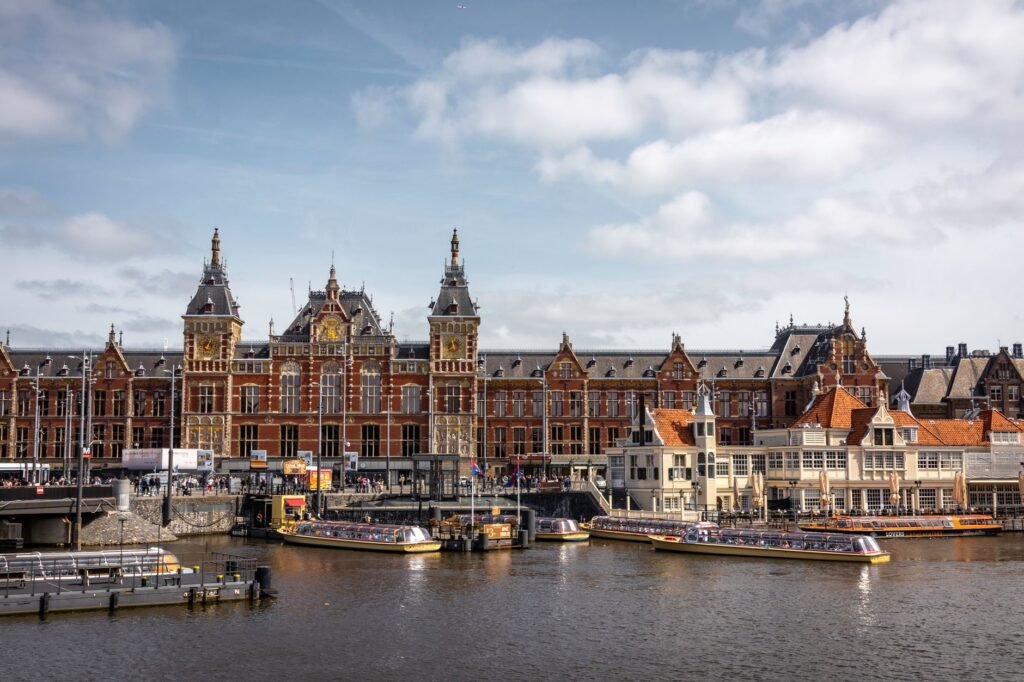
‘t Aepjen, near Centraal Station on the Zeedijk, sits in one of only two surviving wooden buildings in Amsterdam, both of which predate the city’s 16th-century ban on timber construction after repeated fires.
The name means “the little monkey”, from the story that sailors short of money settled their tabs with animals brought back from the Indies.
Carry a debit card that works on the Dutch PIN network, and some cash as backup.
Plenty of small bars take no credit cards at all, and a foreign Visa or Mastercard is the single most common reason visitors end up stuck at the till.
Waterkant, under the car park at the end of Marnixstraat, is the summer terrace on the water that fills the moment the sun appears.
Hill Street Blues near Nieuwmarkt runs to craft beer and a slower room.
Tipping is not expected anywhere; rounding up the bill is the local habit.
Tickets, Entry Rules, And How To Plan The Night
Buy tickets for anything specific from the venue’s own website, because that is where allocations are released and where refunds actually work.
Parties sell out fastest around Amsterdam Dance Event in October, when the whole city’s club capacity is booked out at once.
TicketSwap is the resale platform Dutch venues themselves point to, because it caps resale at a small margin over face value rather than letting touts run.
Resident Advisor is the listings site to check for what is on across the electronic venues on a given night.
Multi-venue nightlife passes are sold to visitors and the price and the venue list both change from season to season, so read the current list of participating venues before buying rather than trusting a figure quoted anywhere.
A pass only pays for itself if you genuinely intend to move between several places in one night, which is not how most people drink.
At the door, staff at the smaller clubs will often ask which party you are here for or what you have come to hear.
This is a filter, not small talk, and it is aimed at large groups who have picked the venue at random.
Answering plainly, arriving in twos and threes, and not shouting gets you in.
Inside, several venues still sell drink tokens - munten - at a separate counter, so find that counter before you queue at the bar.
Doors typically open around eleven, the room fills after midnight, and the larger electronic venues run to five in the morning or past it.
Safety, Etiquette, And Tourist Mistakes To Avoid
The realistic risks on a night out here are pickpockets on the crowded squares, cycle lanes you have wandered into, and misjudging what you have taken - not violent crime.
If someone in your group is in trouble with drink or drugs, tell the venue’s staff first, because every serious club has a protocol and knows who to call.
The Jellinek clinic is the city’s addiction and drug advice service if the problem outlasts the night.
Many clubs put a sticker over your phone camera at the door, and this is not negotiable.
Photographing people without asking is unwelcome everywhere and photographing sex workers in De Wallen is forbidden outright, enforced by the people on the street rather than by anyone you can appeal to.
Dress codes are looser than in most European capitals: jeans and trainers pass at almost every bar and mainstream club.
The underground electronic venues are the exception, and what they are screening for is intent rather than expense, so dressing plainly and darkly is safer than dressing up.
Do not stand in a cycle lane while you work out where to go next, keep your voice down in residential streets after midnight, and if a door team turns you away, leave.
Arguing has never once worked and door teams in the same neighbourhood talk to each other.
Late-Night Food And Extra Evening Experiences
FEBO is the Dutch institution: a wall of small heated hatches, coins or card in the slot, kroket or frikandel out of the door.
It is the cheapest hot food available at three in the morning and the branches on Reguliersbreestraat and Leidsestraat sit exactly where you will need one.
Kapsalon is the other late classic, a foil tray of chips under döner, melted cheese and salad, invented in Rotterdam and sold in shawarma shops across the city.
Earlier in the evening, Foodhallen in the converted tram depot in Oud-West runs a bar and food stalls under one roof and works well as a first stop for a group that cannot agree.
An evening canal cruise is the alternative to a night out rather than part of one, and the bridges are lit after dark year-round.
Book a smaller open boat rather than a glass-roofed coach if you want to hear anything.
Several museums run late openings, most consistently the Van Gogh Museum on Friday evenings with music and a bar in the atrium.
Check current opening times on the museum’s own site before building an evening around one, because late openings are seasonal and get dropped without much notice.
Frequently Asked Questions
What are the best areas in Amsterdam for nightlife and late-night entertainment?
Leidseplein and Rembrandtplein hold the highest concentration of clubs and late bars, and are where to go if you want to decide on the night.
De Pijp and the Jordaan are quieter, more residential and full of brown cafés, at the cost of earlier closing.
What do people typically do at night in Amsterdam besides going to clubs?
Brown cafés, evening canal cruises, late museum openings and comedy in English at the Leidseplein venues cover most of it.
A long sit in one bar is a more common Amsterdam evening than a circuit of several.
What is the dress code for Amsterdam clubs, and can I wear jeans?
Jeans and trainers are fine at mainstream clubs and every bar in the city.
Underground electronic nights are the exception and read obvious going-out clothes as a sign you have not chosen the venue deliberately, so plain and dark is the safer call.
Is Amsterdam nightlife enjoyable for older adults, and which venues suit a 35+ crowd?
Brown cafés, cocktail bars and live jazz at Bimhuis draw an all-ages crowd with no door filter to speak of.
Concerts at Paradiso and Melkweg are booked by artist rather than by age, so the crowd matches whoever is playing.
What are the best nightlife options in Amsterdam for couples versus singles?
Couples tend towards canal cruises, the Jordaan wine bars and the seated music rooms.
Anyone out to meet people does better on the open dance floors at Club NYX or the long weekend parties at Thuishaven than on the Leidseplein squares.
Are nightlife passes or tickets worth it, and what do they usually include?
Multi-venue passes bundle entry to a list of clubs and bars, sometimes with a welcome drink, and both the price and the list change through the year.
They only pay off if you will really visit three or more of the participating venues, so check the current list against where you actually want to go before buying.