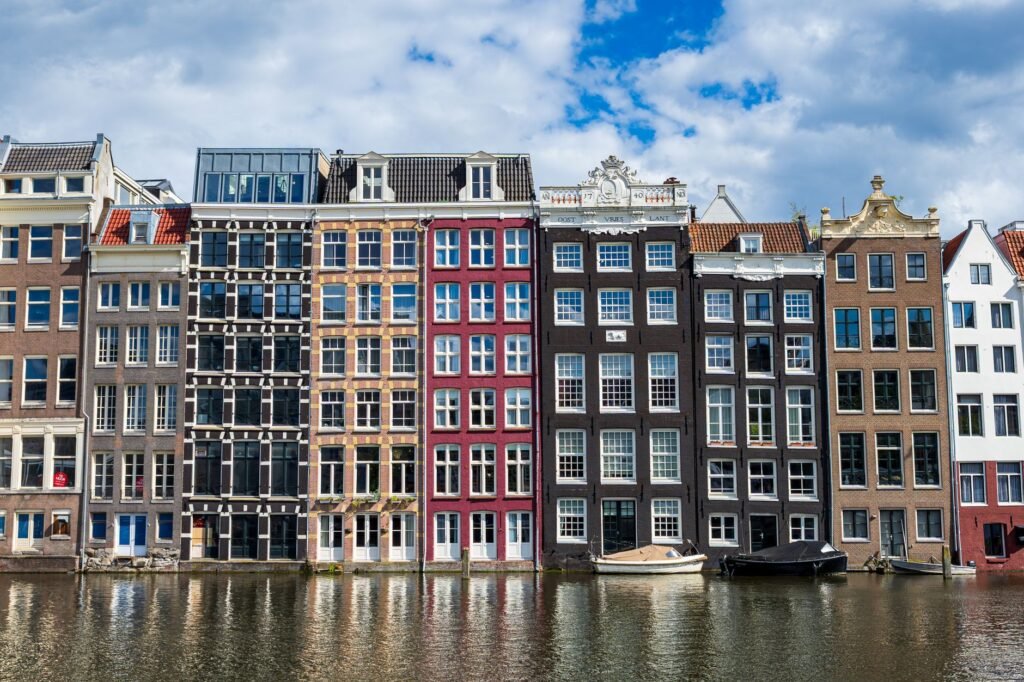

Dutch lenders will finance up to 100 per cent of a property’s appraised value, which means the deposit most international buyers are saving for is not the obstacle - the buying costs, the contract type and, in Amsterdam, the ground lease are.
This guide covers what you can borrow and on what evidence, the documents to have ready before you bid, the sequence from offer to notary, and the costs and tax rules that decide what the house really costs.
What You Can Borrow
Your maximum is set by gross annual income, existing debts and the interest rate at application, applied through affordability tables that lenders are not free to depart from.
Financing up to 100 per cent of the appraised value is standard, so no deposit is required against the purchase price itself - but the buying costs are not financed and must come from your own money.
Contract type is what most often reduces the figure.
A permanent contract counts in full; a temporary one usually needs an employer’s intent statement - the intentieverklaring - confirming a permanent contract will follow, without which lenders discount the income or decline it.
Bonuses, overtime and holiday allowance are typically averaged over three years, and structural components count more readily than discretionary ones.
Income paid in a non-euro currency is discounted for exchange risk, commonly by 10 to 20 per cent, and some lenders will not accept it at all.
The self-employed generally need three years of accounts, though some lenders now work from one year plus a specialist income assessment.
Mortgage rates through 2026 have sat in the mid-3 to low-4 per cent range depending on fixed period and loan-to-value, and the rate you are quoted moves the maximum by tens of thousands of euros - get a current quote rather than working from a figure you read.
ABN AMRO, ING and Rabobank all lend to internationals, and their policies on foreign income, temporary contracts and 30 per cent ruling income differ enough that the right lender matters more than the headline rate.
What To Have Ready Before You Bid
Amsterdam sellers set bidding deadlines and read offers on the same afternoon, so paperwork assembled after acceptance is paperwork assembled too late.
The standard file is a valid passport, your BSN, your employment contract, three months of payslips, your most recent jaaropgave annual income statement, and a residence permit if you need one.
Self-employed applicants add three years of tax returns and financial statements.
Get a mortgage promise from a lender or advisor before you start viewing.
An offer accompanied by one is materially stronger than an offer without, and in a multiple-bid situation it is often the tiebreaker.
An aankoopmakelaar, a buying agent, is not legally required and is close to essential for a first purchase here: they see listings before they are public, they know what a street actually sells for against its asking price, and they read the ground lease.
The 30 per cent ruling raises your net income but not your gross, and gross is what lenders assess - do not budget on the net figure.
Erfpacht: The Amsterdam Question
A large share of Amsterdam property sits on erfpacht, municipal ground lease, meaning you own the building and lease the land beneath it.
There are two kinds and the difference is measured in tens of thousands of euros.
Eeuwigdurende erfpacht is perpetual, with the ground rent either bought off outright or fixed and indexed; voortdurende erfpacht runs in periods, and at the end of a period the ground rent is reset to current land values, which can multiply it.
Ask three questions about any Amsterdam listing before you bid: is it erfpacht or freehold, if erfpacht which type, and if it is voortdurende, when does the current period end?
Lenders take the ground rent into account when calculating what you can borrow, so an unresolved lease reduces your maximum as well as your monthly budget.
From Offer To Keys
Most searching happens on Funda, which carries essentially every listing from every agent.
Your offer should carry the conditions you actually need - a financing condition (voorbehoud van financiering), usually four to six weeks, and a structural survey condition (bouwkundige keuring) - knowing that each condition weakens the offer against competing bids.
Once both parties sign the koopovereenkomst, a statutory three-day cooling-off period runs in the buyer’s favour, during which you can withdraw for any reason and at no cost.
After that the contract normally requires a deposit or bank guarantee of 10 per cent of the purchase price, held by the notary, which you forfeit if you walk away without a valid condition.
Transfer happens at a civil-law notary, who checks the title, settles the mortgage and registers the deed - you choose the notary, and their fees vary more than most buyers expect.
Mortgage Type And Tax
Only two mortgage types qualify for interest relief on a new loan: annuity, where the total monthly payment is level and the interest share falls over time, and linear, where the principal repayment is constant so payments start higher and decline.
Linear costs less in total interest and demands more cash in the early years; annuity is what most buyers take.
The hypotheekrenteaftrek lets you deduct mortgage interest against Box 1 income, but only where the loan is repaid in full within 30 years on one of those two schedules.
The rate at which the deduction is given has been reduced in steps and no longer matches the top tax rate.
Against it, the eigenwoningforfait adds a percentage of the WOZ value to your taxable income, so the net benefit is smaller than the gross deduction suggests.
One-off financing costs - advice fees, valuation, NHG premium - are deductible in the year you buy, and a great many buyers never claim them.
What It Costs To Buy
Transfer tax is 2 per cent of the purchase price for owner-occupiers.
First-time buyers aged 18 to 34 pay nothing on a home below an annually indexed ceiling, once in their lives; buyers who will not live in the property themselves pay a much higher investor rate, reduced to 8 per cent for 2026.
Notary fees run roughly €800 to €1,500 and a valuation €500 to €800.
Mortgage advice costs €2,000 to €4,000, quoted as a flat fee rather than commission.
NHG, the national mortgage guarantee, is available below an annually indexed purchase limit for a one-off premium, and buys a rate discount that usually repays the premium within a few years.
Both the limit and the premium are reset each year and published by NHG.
Budget in the region of 4 to 6 per cent of the purchase price for costs, and remember none of it can be borrowed.
Most Amsterdam homes stand on leased city land; our erfpacht guide for homebuyers explains what that means before you buy.
Frequently Asked Questions
Can an expat get a Dutch mortgage?
Yes, with a BSN, proof of income, an employment contract or self-employment history, and a residence permit where one is required.
Lending of up to 100 per cent of the appraised value is standard.
Do I need a deposit?
Not against the purchase price, but the buying costs - roughly 4 to 6 per cent - cannot be financed and must be your own funds.
Will lenders count my foreign income?
Many will, discounted by 10 to 20 per cent for currency risk, and policies differ sharply between banks.
Bonuses are usually averaged over three years; RSUs are accepted by some lenders and not others.
What is erfpacht and does it matter?
Municipal ground lease, and it matters a great deal: perpetual leases are predictable, while continuing leases reset the ground rent at the end of each period, sometimes by a multiple.
Establish which type applies before you bid.
Can I withdraw after signing?
Yes, within three days of signing the koopovereenkomst, for any reason and at no cost.
After that you are held to the contract and to a 10 per cent deposit or bank guarantee unless a condition you negotiated releases you.
Is the mortgage interest deduction worth having?
Yes, but less than the headline suggests - the relief rate has been reduced, and the eigenwoningforfait adds a slice of your WOZ value back to taxable income.
Claim your one-off financing costs in the year of purchase; most buyers forget.
Related reading
In the news
- Average earners can afford seven Amsterdam homes 24 August 2026