
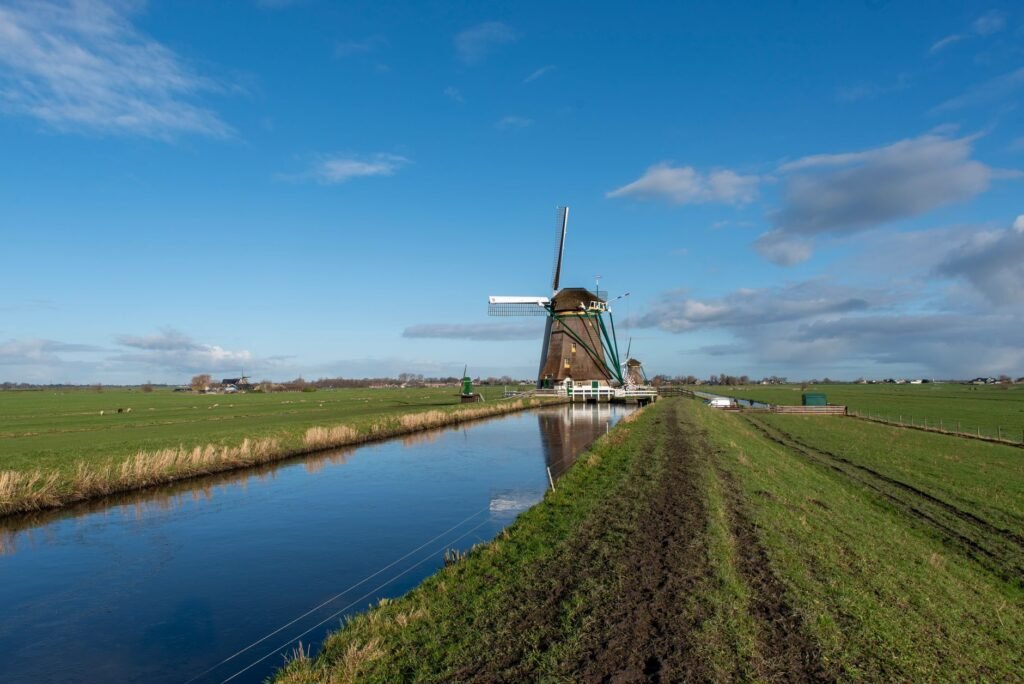
Regional water authority Hoogheemraadschap Hollands Noorderkwartier has launched extra field inspections along local dikes near Durgerdam to monitor and manage drought-related cracks.
Sustained dry conditions have created a regional precipitation deficit of 225 millimeters, prompting specialized teams to walk dozens of kilometers of vulnerable embankments.
Peat dikes require constant moisture to maintain their structural weight and cohesion.
When peat dries out, it shrinks and forms deep fissures that are often hidden beneath surface grass.
Understanding the risk to peat structures
Drying peat presents a serious structural risk because the material cannot recover its original density once it completely dries out.
Extensive drying can cause peat layers to lose weight and float on wetter ground beneath the polder, potentially allowing water to seep through or over the barrier.
Inspectors use measuring rods to check the depth of cracks found along the route, logging coordinates for continuous monitoring.
If a fissure poses an immediate stability issue, technical specialists are called in to seal the gap using clay granules.
Scalable monitoring across the region
Crews are currently monitoring around 65 kilometers of high-risk peat dikes across the northern water district.
If the regional rainfall deficit reaches 275 millimeters, the water board plans to scale up operations to cover up to 500 kilometers of dikes.
Water authorities across the city of Amsterdam and surrounding rural areas have increased routine monitoring protocols during dry summer periods since 2018.
While officials report that current dike conditions near Durgerdam remain manageable, frequent field checks will continue until significant rainfall restores groundwater levels.


![Top [count] Travel Blogs to Follow - OnToplist.com](https://www.ontoplist.com/images/ontoplist31.png?id=6a8dcf108f478)