
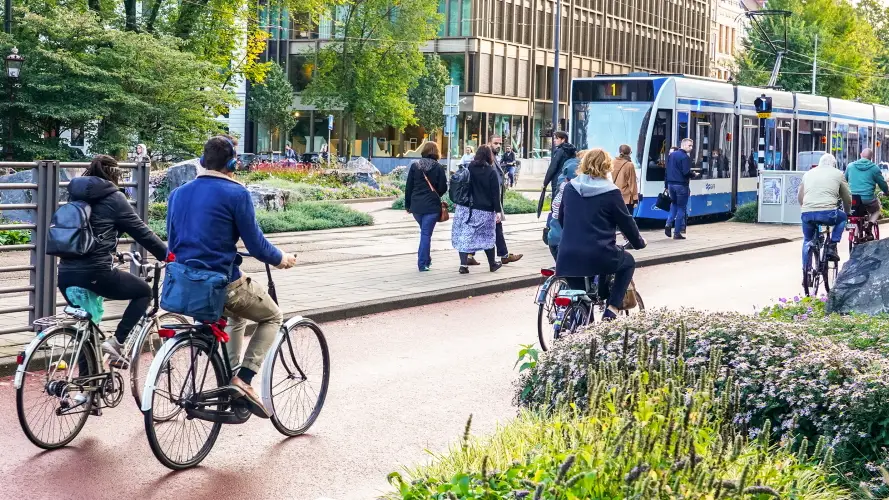
Work on the Binnenring is officially finished after ten years of phased construction across the city centre. The seven kilometre route stretches from Czaar Peterstraat through Sarphatistraat, Weteringschans, and Marnixstraat before ending at Haarlemmerplein.
Cars are treated as guests along the corridor, which serves as the city’s first genuine bicycle street network. Motor vehicles face a speed limit of 30 kilometres per hour, alongside several new one-way restrictions.
Safer streets and public transport updates
Where designated bicycle streets could not be installed, the city widened existing bike paths. Busy junctions were redesigned to improve safety, and wider pavements give pedestrians more space.
Public transit infrastructure was also altered as part of the project. Workers adjusted tram tracks and made stops along the route more accessible for passengers.
One section near the route remains unfinished. The intersection of Rozengracht and Marnixstraat is being rebuilt under the separate Oranje Loper project rather than the Binnenring works.
Historic ramparts transformed into central path
The route largely follows the footprint of the Schans, a defensive rampart built around the canal belt in 1660. The rampart stood alongside the Singelgracht for nearly two centuries before being dismantled between 1840 and 1860 to make way for wide streets and large buildings.
As part of the final stages, Czaar Peterstraat received a small square with benches, greenery, and a jeu-de-boules court. Other sections saw new green strips near Artis, a redesigned Alexanderplein, and semicircular flower beds near the Museumbrug to help calm traffic.


![Top [count] Travel Blogs to Follow - OnToplist.com](https://www.ontoplist.com/images/ontoplist31.png?id=6a8dcf108f478)